Strategic Shift
The phone call is becoming a strategic business asset.
The phone call has always been important, but it has often been treated as a temporary interaction rather than a permanent business asset. A customer calls. A team member answers. Notes are taken. Maybe the CRM is updated. Maybe the appointment is booked correctly. Maybe the service request is routed to the right person.
Or maybe the information disappears the moment the call ends. This is not a people problem. It is a systems problem. Most service companies have built powerful digital systems around the customer journey, but the phone call often remains disconnected from those systems.
That gap creates missed opportunities, delayed follow-up, poor routing, incomplete data, and limited visibility into what customers actually need. The phone is often the front door of the business. But in many Home Services and B2B Service businesses, it is still not fully connected to the operating system behind it.
From Call Answering to Call Intelligence
Call answering is reactive. Call intelligence is operational.
Traditional call handling was built around availability. Can someone answer the phone? Can they take a message? Can they route the customer? Can they schedule the appointment? Can they notify the right person? Those questions still matter, but they are no longer enough.
Modern service businesses need to know what happened on the call, what the customer wanted, what information was captured, what action was taken, and what should happen next. That is the difference between call answering and call intelligence.
Traditional Call Answering
Answer the phone. Take a note. Hope the process continues.
- Customer details may be captured manually or inconsistently.
- Follow-up depends on staff availability and process discipline.
- Service requests may be routed late or without enough context.
- Leadership has limited visibility into what happened.
AI Call Intelligence
Understand intent. Structure data. Trigger the next action.
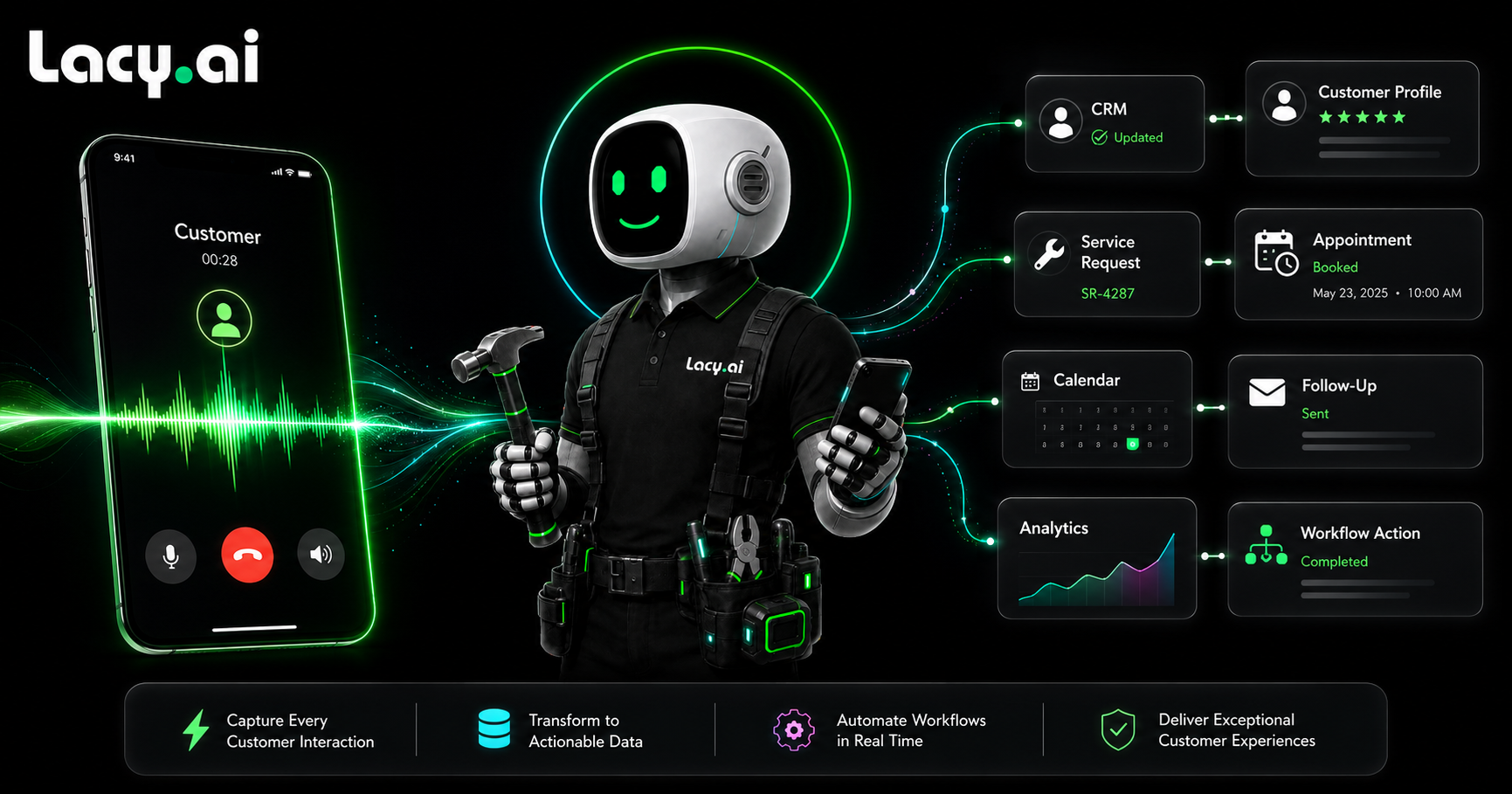
- AI phone agents capture urgency, service need, location, and account context.
- CRM records, calendars, dispatch, SMS, and email can update automatically.
- Teams can route work faster and reduce missed follow-up.
- Every call becomes part of a measurable, repeatable process.
The phone call is no longer just a conversation. It is becoming an operating point for customer experience, revenue capture, and business intelligence.
Point of Contact Intelligence
Operational intelligence means understanding customer intent at the moment it matters most.
Not hours later. Not after someone reviews a recording. Not after a team member manually sorts through notes. And not after the customer has already called a competitor.
Every call contains valuable business data: who is calling, why they are calling, how urgent the need is, what service they want, whether they are a new customer or an existing account, what job or order they are asking about, and what should happen next.
When that information is captured cleanly and connected to business systems, the call becomes both a customer experience and a data event.
IntentReason for call, service type, urgency, account status, and buying signal.
ActionAppointment, service request, routing, CRM update, or follow-up.
InsightDemand patterns, account requests, outcomes, and lost opportunity reasons.
.png)

%20.png)