.png)
The Future of Call Centers: How AI Phone Agents Connect Calls to Workflows

From Traditional Call Centers to Connected AI Phone Operations
Customer calls remain one of the clearest signals of immediate demand. A homeowner with an urgent repair, a business requesting a quote, or a customer trying to schedule service expects a fast and accurate response.
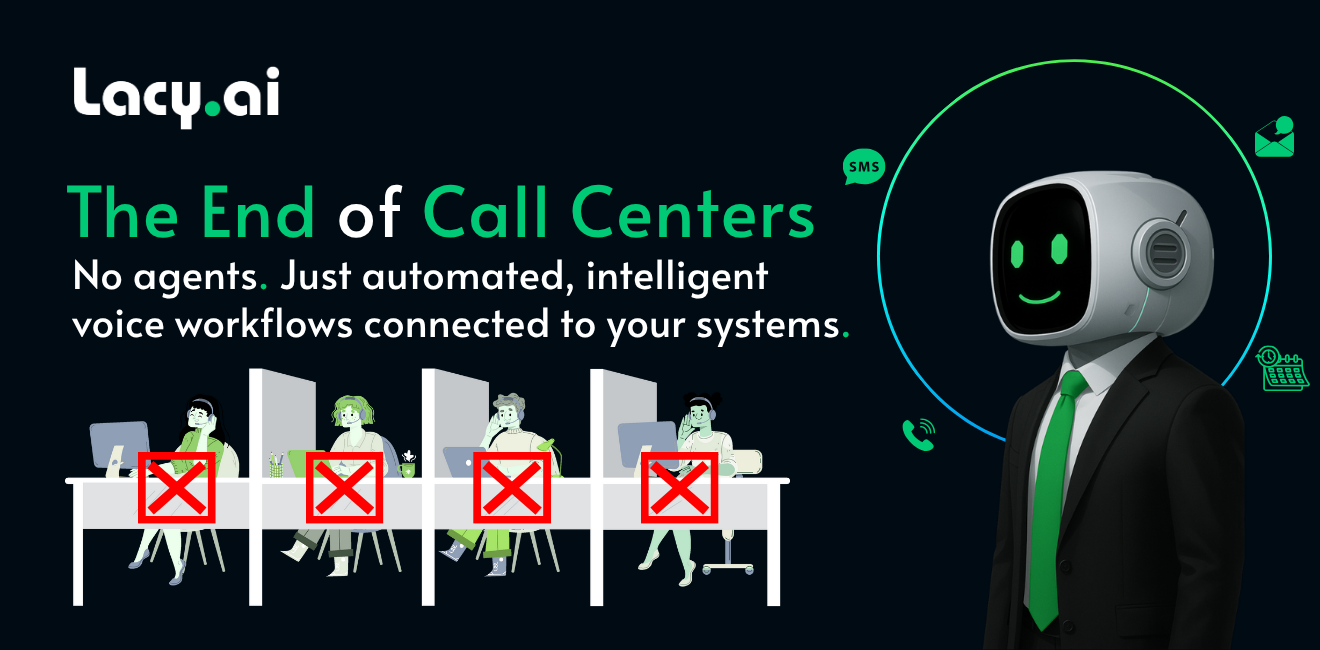
Traditional call operations can struggle when volume changes, the office closes, or information must move between the phone, CRM, calendar, and service team. The problem is not simply who answers. The larger problem is whether every conversation produces a reliable next action.
Lacy.ai gives service businesses an AI Phone Agent and workflow layer designed to answer calls, collect structured information, qualify requests, book appropriate next steps, route urgent situations, and update connected systems. Human team members remain available for exceptions, judgment, and high-value conversations.
Why Traditional Call Operations Create Friction
1. Cost does not always follow value
Call operations can include staffing, training, management, after-hours coverage, software, overflow support, and vendor fees. Those costs may continue even when demand changes. The right comparison is not a generic industry benchmark. It is the total cost of answering, qualifying, documenting, routing, and following up on calls inside your own operation.
Lacy.ai uses subscription, deployment, and usage pricing that varies by plan and operating requirements. Review the current Lacy.ai pricing page for the latest plan details, included capabilities, and deployment options.
2. Phone conversations are often disconnected from operating systems
When notes are captured manually, important details can be delayed, incomplete, or difficult to use. Teams may need to re-enter information, review recordings, or chase context before they can act.
A configured Lacy.ai deployment can capture call details and send structured information to connected systems such as a CRM, calendar, or workflow. Available actions depend on the business process, integrations, permissions, and deployment configuration.
3. Coverage and consistency are difficult to maintain
Peak demand, after-hours calls, staff availability, and seasonal volume can make consistent phone coverage difficult. An AI Phone Agent can provide configured coverage for supported call types and follow the same approved intake logic across conversations.
Complex, sensitive, or unusual situations should still follow a defined escalation path. The goal is a stronger operating model where automation handles repeatable work and people focus on calls that require judgment.
4. Qualification depends on accurate intake
A useful lead is more than a name and phone number. Service businesses may need the caller's location, service type, urgency, timing, budget range, property details, or eligibility information before deciding what should happen next.
Lacy.ai can be configured to collect the fields your team needs, apply approved routing logic, and send qualified information to the appropriate destination. The exact workflow is based on your business rules.
What an AI Phone Agent Can Do
Lacy.ai is designed to connect the customer conversation with the systems and workflows that move work forward. Depending on configuration, an AI Phone Agent can:
- Answer inbound and after-hours calls for supported scenarios
- Capture contact, service, location, timing, and urgency details
- Qualify requests using business-approved questions and rules
- Book appointments when calendar access and scheduling logic are configured
- Route urgent calls or escalate exceptions to the correct person
- Create structured summaries, dispositions, and follow-up tasks
- Update connected CRM and workflow systems
- Support approved outbound campaigns and follow-up workflows
Where Human Teams Still Matter
The strongest deployments do not assume every conversation should be automated. People remain important for exceptions, negotiations, complaints, sensitive information, unusual requests, and decisions that require context or authority.
A practical operating model defines three things before launch:
- Which calls the AI Phone Agent can complete
- Which calls require a live transfer or follow-up
- Which data and actions must be recorded for the team
This approach reduces routine workload without removing the controls needed to protect customers and the business.
Use Cases for Service Businesses
Home services
Roofing, HVAC, plumbing, electrical, cleaning, landscaping, remodeling, and other field service businesses often receive calls when staff are driving, working on site, or outside office hours. An AI Phone Agent can collect the service address, request type, urgency, and scheduling preferences, then route or book the next appropriate step.
Property and facility operations
Property managers, storage operators, and facility teams may need to separate sales inquiries, maintenance requests, tenant questions, access issues, and emergencies. Structured intake and routing can help each request reach the right workflow.
Professional and B2B services
Legal, financial, technology, consulting, and other B2B teams can use approved intake logic to collect preliminary information, schedule consultations, and document the reason for each call. Regulated or sensitive workflows require appropriate review, disclosure, permissions, and escalation controls.
How to Deploy AI Phone Operations Responsibly
An effective launch starts with the real customer journey, not a generic script. The deployment team should document common call types, required questions, supported actions, escalation rules, system permissions, compliance requirements, and expected outcomes.
- Map the call journey. Identify the calls received today and the outcome each call should produce.
- Define the data. Decide which fields are required for qualification, booking, routing, and reporting.
- Connect the systems. Configure only the CRM, calendar, messaging, and workflow actions needed for the approved use cases.
- Test realistic scenarios. Include ordinary calls, edge cases, transfers, failures, and situations that must reach a person.
- Review and improve. Use real call outcomes to refine questions, prompts, routing, and follow-up rules.
How to Measure the Business Value
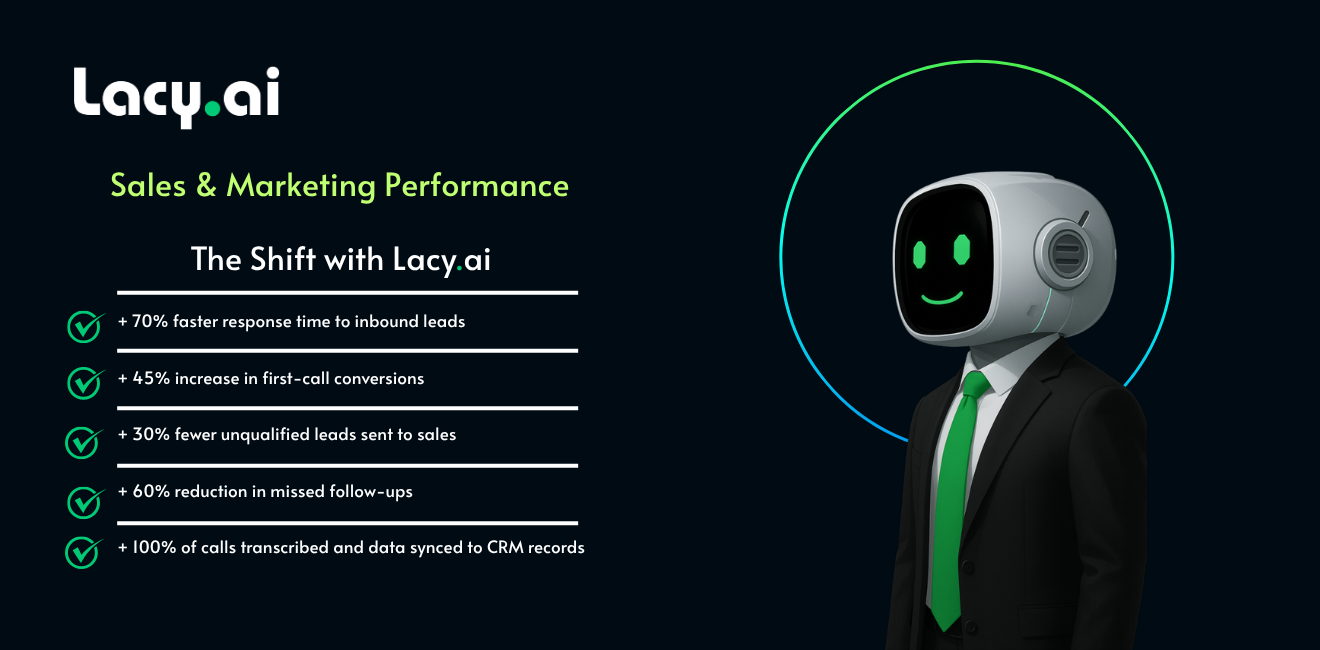
Results should be measured against the company's own verified baseline. Useful metrics may include answer rate, qualified appointment rate, transfer rate, booking completion, required-field completion, response time, follow-up completion, and cost per completed outcome.
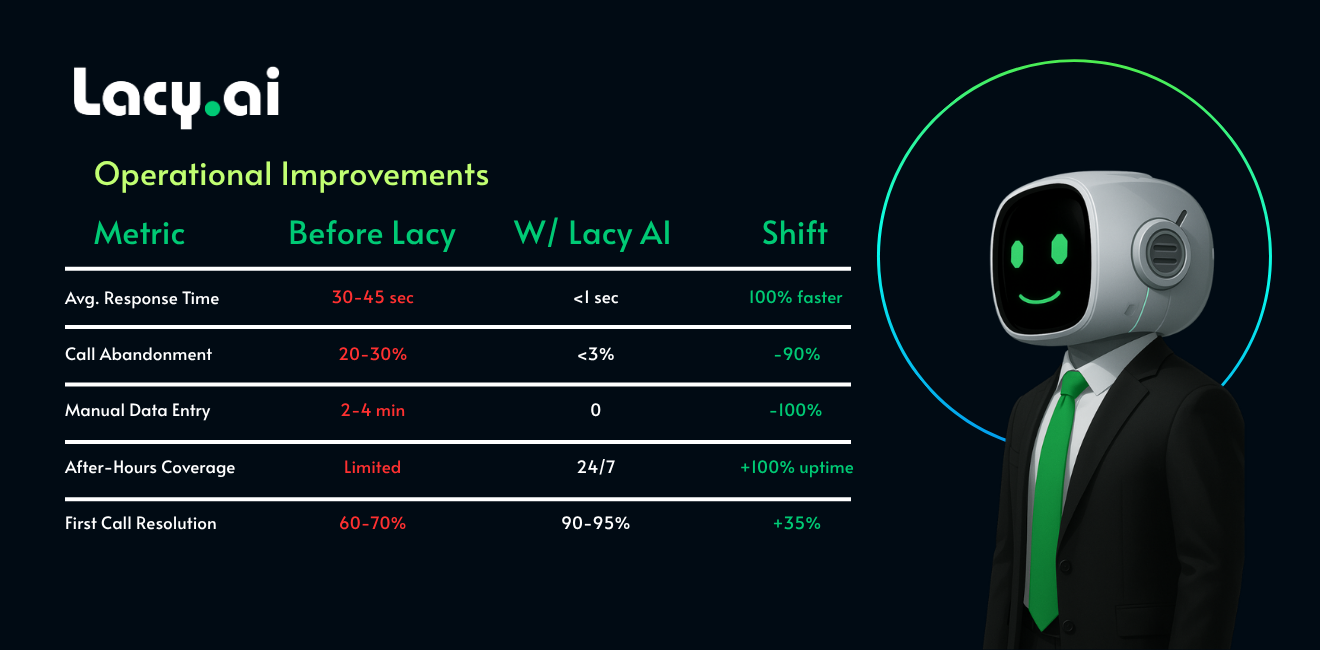
Avoid relying on generic improvement percentages unless the source, methodology, comparison period, and customer context are documented. Lacy.ai's Organic Growth OS applies the same evidence standard to public claims.
The Future Is a Connected Call Operation
The shift is not simply from humans to software. It is from disconnected phone handling to a coordinated system that captures intent, applies business rules, takes approved actions, and gives the team reliable information.
Lacy.ai helps service businesses build that connected operating layer. The AI Phone Agent handles supported conversations, connected workflows move the work forward, and human teams retain responsibility for exceptions and decisions.
Book a Lacy.ai demo to map your current call process and see which parts can be automated safely.
Related reading: Is Your Phone Connected to a Workflow?