 01
01Water-order intake
Define the caller, delivery point, requested timing and district-required units. Give staff the information needed for review.
PUBLIC WATER & IRRIGATION
Water-order intake. Service requests. Work moving forward — during business hours and after hours, within your defined process.
30-minute demo · Bring one routine call and one exception.
Full-time phone operations and phone orders.

“I’d like to request water
for my delivery point.”
THE CUSTOMER RELATIONSHIP
Orange Cove Irrigation District in California uses Lacy.ai full time for phone operations and phone orders.
That use case is the starting point for a conversation about your district’s own calls, rules and staff handoffs.
Read the customer briefBUILT AROUND THE REQUEST
01Define the caller, delivery point, requested timing and district-required units. Give staff the information needed for review.
 02
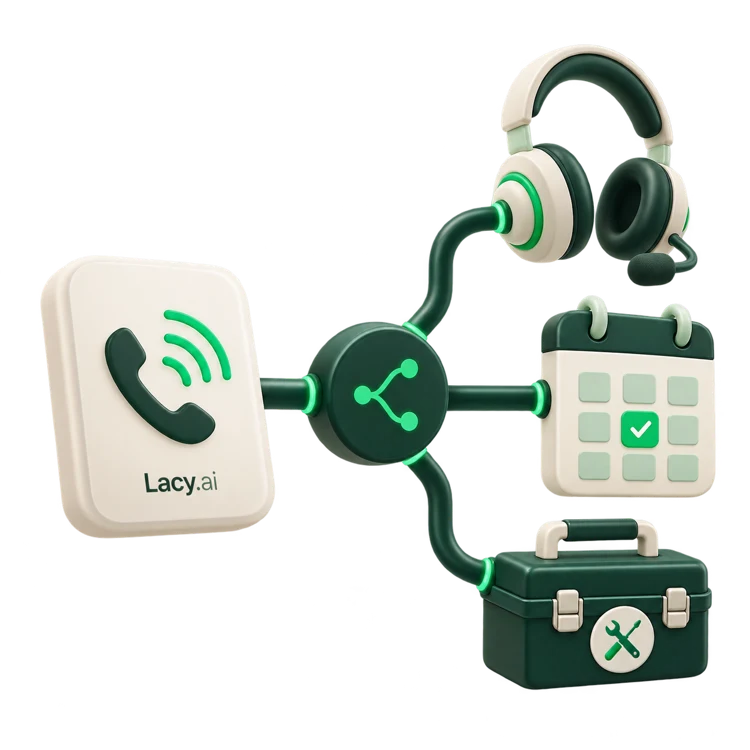
02Capture the location, issue and callback details. Define the right queue and the point where a person takes over.
 03
03Set the routine intake path, approved on-call escalation and fallback when a person cannot be reached.

MULTILINGUAL PHONE SUPPORT
Support conversations in English, Spanish and other configured languages. Keep the required request details, district terminology and next steps consistent.
Confirm supported languages, local terms and human handoff rules during setup. Read back critical details before routing the request. Explore multilingual support →
BEYOND THE CALL
A conversation is the starting point. Connect the captured request to the people, records and follow-up your district needs.
System connections and messaging are scoped and tested for your deployment. Explore workflow automation →

SEE YOUR PROCESS IN ACTION
Walk through water-order intake, an after-hours exception and the next staff handoff. Discuss your systems and the right starting scope.
EXPLORE A DISTRICT WORKFLOW
Select a scenario and step through the proposed process. This interactive example uses fictional data. It does not place an order or depict OCID’s configuration.
Request receipt, order acceptance and water delivery are different states. Your authorized process governs availability, allocations and scheduling. Connections and controls are scoped and tested before deployment.
Download the workflowA DEFINED STARTING SCOPE
Bring a routine call and an exception. Identify the required fields, rules and staff owner.
Assess the proposed handoff, system connections, security evidence and purchasing requirements.
Agree on the scope and acceptance criteria. Test normal requests and the failure paths your team needs.
FOR YOUR TEAM
COMMON QUESTIONS
We first review your available interfaces, required fields and access rules. Direct updates require technical validation. A staff-reviewed handoff may be the right starting scope.
No. The proposed workflow distinguishes receipt from acceptance. Your district defines who can accept an order and what status the caller should hear.
Coverage, on-call routing and unsuccessful-transfer behavior are agreed and tested before deployment. An urgent escalation only counts as acknowledged when the responsible person or process confirms it.
Yes. Bring your evidence and purchasing requirements into the initial discussion. Security controls, data handling, support and commercial terms need review for the actual deployment.
YOUR DISTRICT. YOUR PROCESS.
Let’s work through what your callers need
and what your staff needs next.