Target pallet order
What happens in this call
Target orders a pallet of ice from SF Ice. The AI Phone Agent naturally confirms the request and applies its trained knowledge of the pallet’s weight and quantity.
Keep the context from the first conversation to the team that follows through.
Connect phone intake to your approved CRM, scheduling, messaging, and service workflows. Available actions depend on your configured systems.
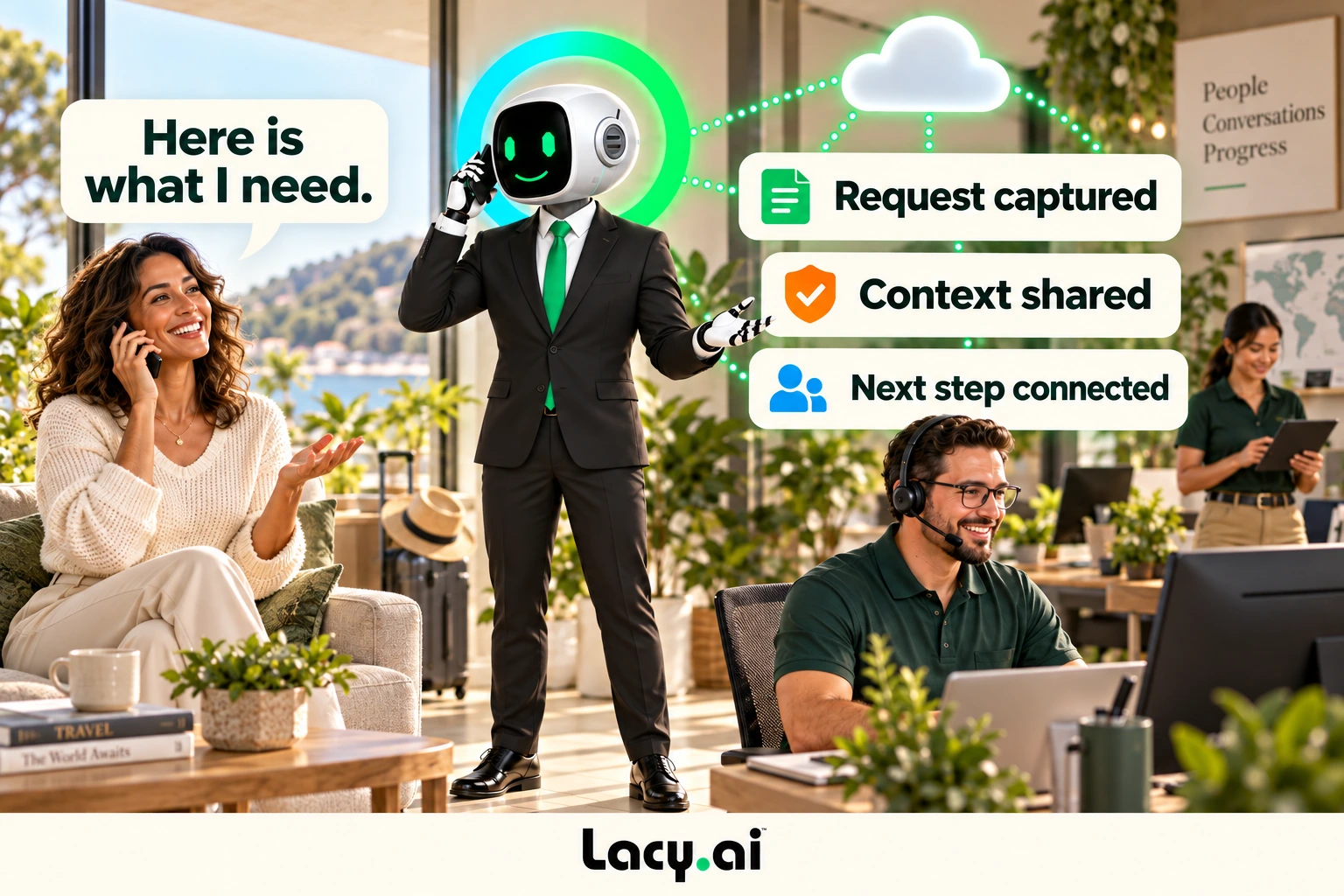
Listen to real examples of Lacy answering calls, capturing details, recognizing customer needs, and moving each conversation toward the right next action.
Target orders a pallet of ice from SF Ice. The AI Phone Agent naturally confirms the request and applies its trained knowledge of the pallet’s weight and quantity.
Walgreens requests the minimum number of ice bags. The AI Phone Agent uses knowledge base logic to determine the correct quantity and handles the order naturally.
Southwest Airlines orders a pallet of ice and updates the delivery address. The AI Phone Agent reasons through both requests and completes the call in a natural, human-like way.
These are customer calls handled for San Francisco Ice Company. Target, Walgreens, and Southwest Airlines are callers in these examples, not presented as direct Lacy.ai customers or endorsements. Sensitive details may be redacted for privacy.
Record the caller’s need and relevant details so the next step starts with useful context.
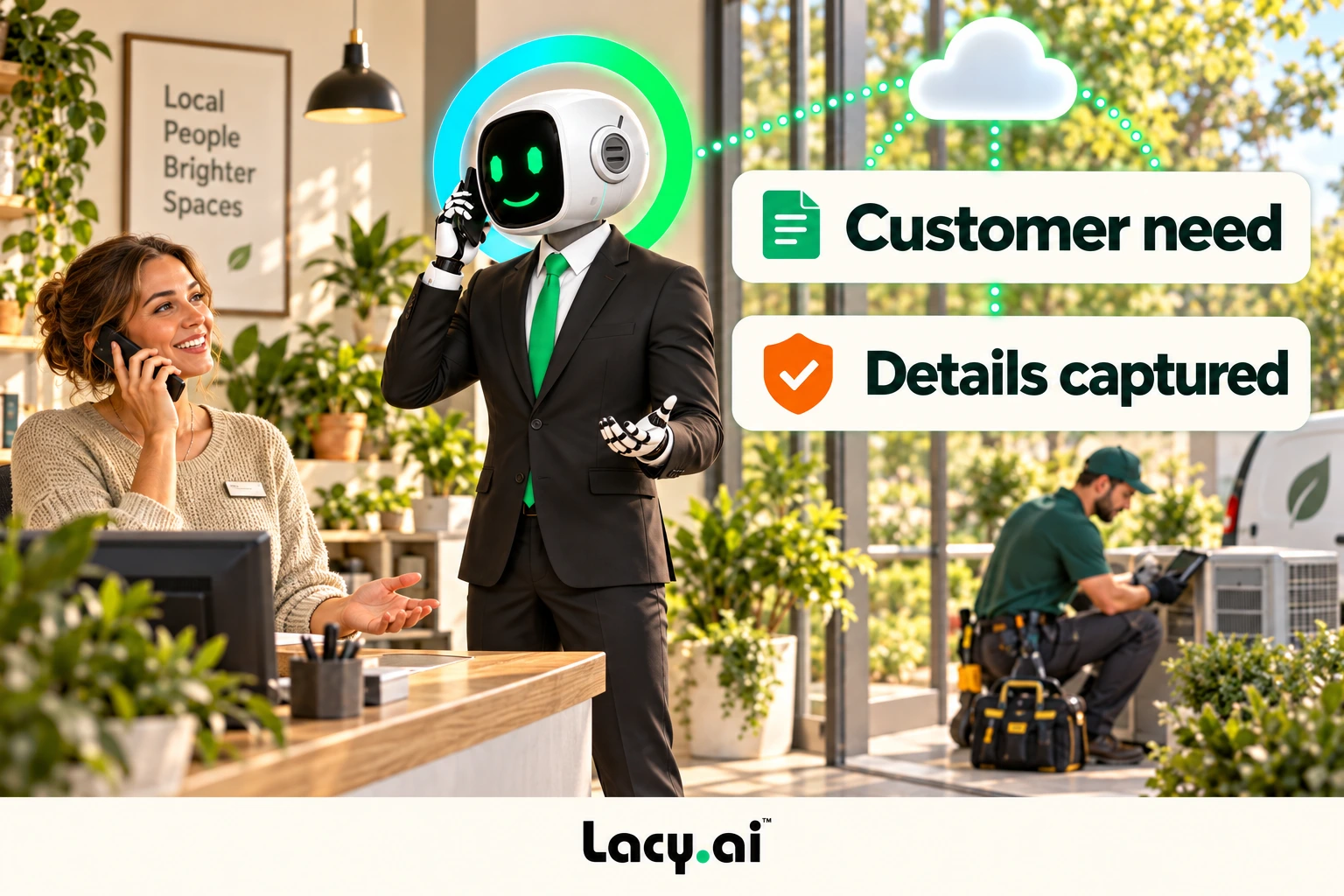
Connect the request to the right record, workflow, or team through your approved systems.
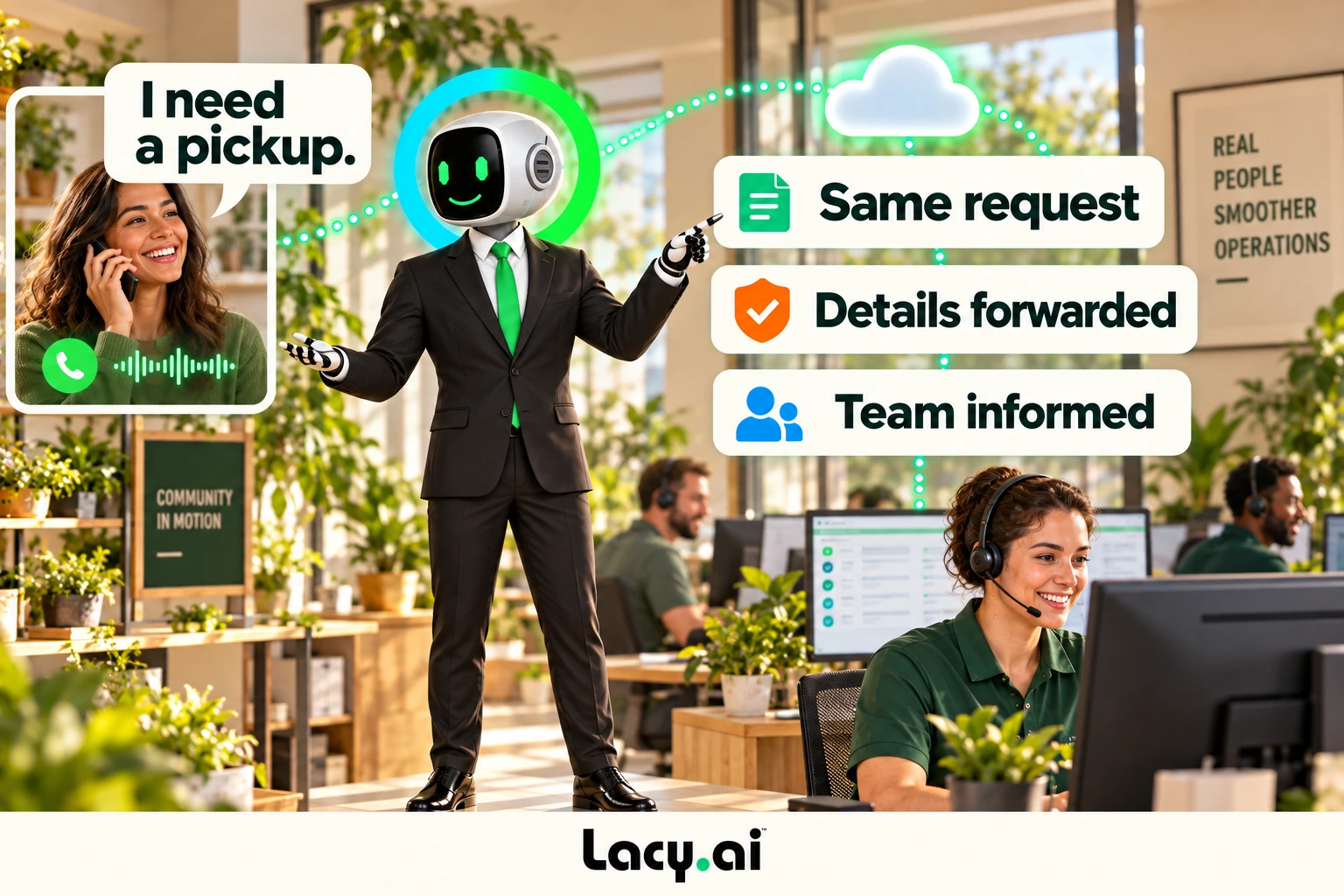
Help the team follow through with the available context, while configured updates preserve the outcome.
Example workflow. Actions depend on your connected systems and configured business rules.
Book a Free 30-Minute Demo →AI-powered omnichannel service connects customer conversations to the people, systems, and next steps that keep work moving. Instead of treating every call, message, or follow-up as an isolated event, an omnichannel approach preserves useful context and routes the request into an approved workflow.
It uses automation to capture customer intent, organize conversation details, and connect those details with the systems a business already uses. Depending on the approved setup, that may include phone conversations, web inquiries, email follow-up, CRM records, scheduling tools, and internal alerts.
The AI layer can help classify the request, capture structured information, and trigger a defined next step. The business remains in control of what the system may do, which data it records, and when a person must review or take over.
A customer should not have to repeat the same request every time a conversation moves between channels or teams.
Structured questions and required fields help teams receive clearer, more complete requests.
Capture the reason for the call and the information your team needs. A connected handoff helps the next person continue with useful context.
Approved routing rules can move the right details to scheduling, CRM, alerts, or a person sooner.
When conversations and outcomes connect, teams can evaluate service demand and follow-through with verified data.
Lacy.ai helps service businesses connect customer conversations with the workflows that follow. An AI Phone Agent can answer inbound and after-hours calls, capture the purpose of the call, collect structured details, qualify the request, and route the next step into connected business systems.
Keep existing service platforms in place. Configure which actions Lacy.ai may trigger, which systems receive the details, and when a person takes over.
When the connected records provide the relevant history, your team can carry the request forward with the details already captured.
Connect conversations with approved CRM, scheduling, communications, commerce, and automation workflows. Availability depends on the permissions and configuration of each system.
Connected conversations can support home-service teams managing new requests and after-hours calls, property and logistics teams routing status or exception requests, B2B service businesses qualifying demand, and support teams that need consistent intake before escalation.
The strongest opportunities have a clear conversation, a repeatable set of required details, an approved destination for the next step, and a measurable outcome the team already cares about.
Which channels and request types should be included first?
Which details are required before a request can move forward?
What may be automated, and what requires human review?
Which situations must move immediately to a person?
Where should records, bookings, alerts, and outcomes live?
Which verified outcomes will show whether the workflow is improving?
No. The important requirement is that approved channels and systems can share the context needed for the next step. Specialized tools may remain in place.
No. A responsible design includes escalation rules, approval gates, and clear boundaries for situations that need human judgment.
It can serve as an intake layer for phone conversations, capturing intent and structured details, then routing the request into an approved workflow.
Depending on the verified data available, teams may review qualified conversations, bookings, completed handoffs, response and follow-up activity, and exceptions that require attention.
Plan a connected customer workflow around your systems, permissions, and operating rules.