Call Performance
Track call volume, bookings, lead qualification, and AI phone agent outcomes from one executive performance view.
Turn customer conversations into CRM updates, bookings, and follow-up.
Book a Free 30-Minute Demo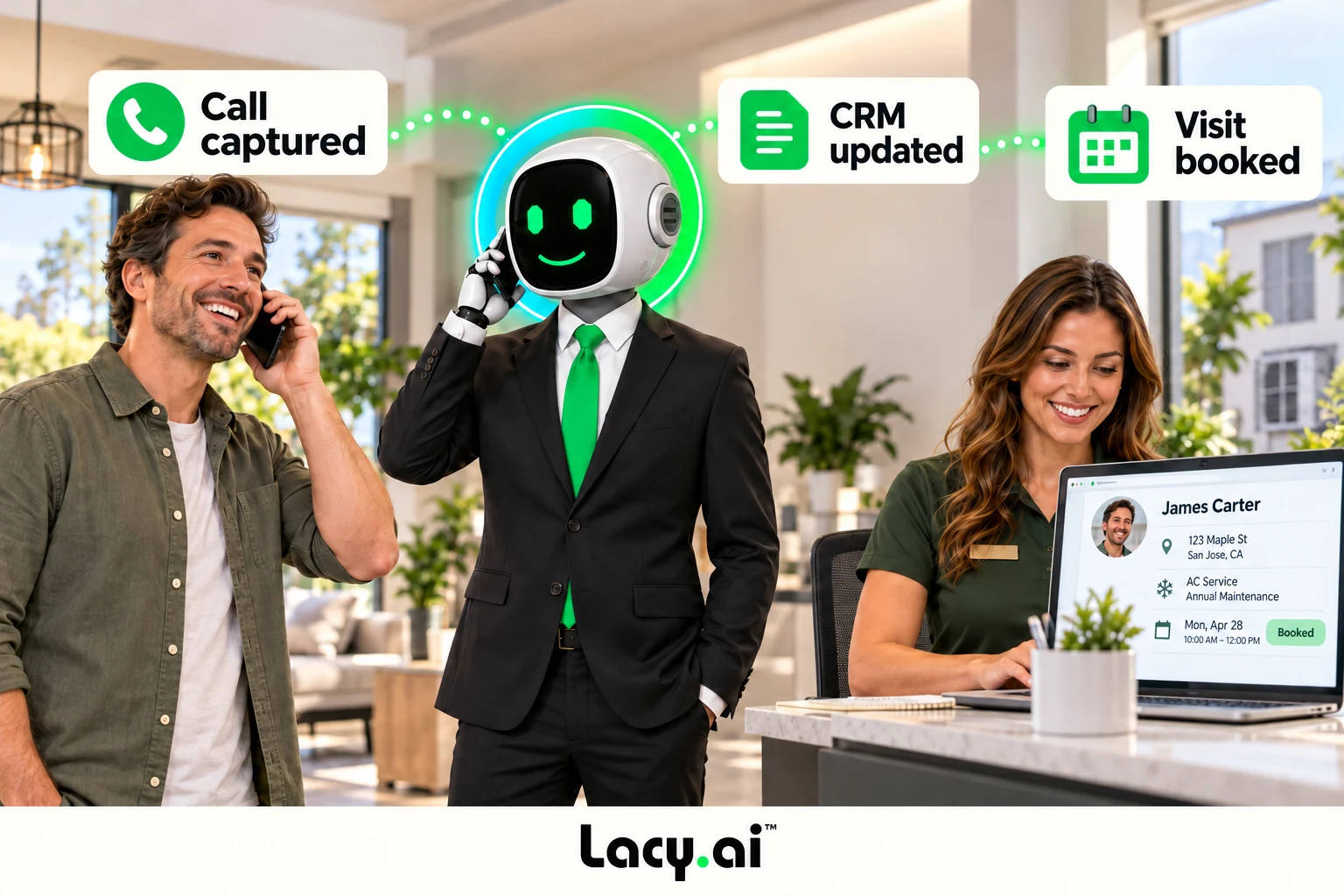
Explore six connected views, from call handling to the work that follows.
Platform illustrations with sample data. Explore the live platform in your demo.
Plan the connection around the work your team needs to get done.
Decide which call details your team needs, where they belong, and what should happen next.
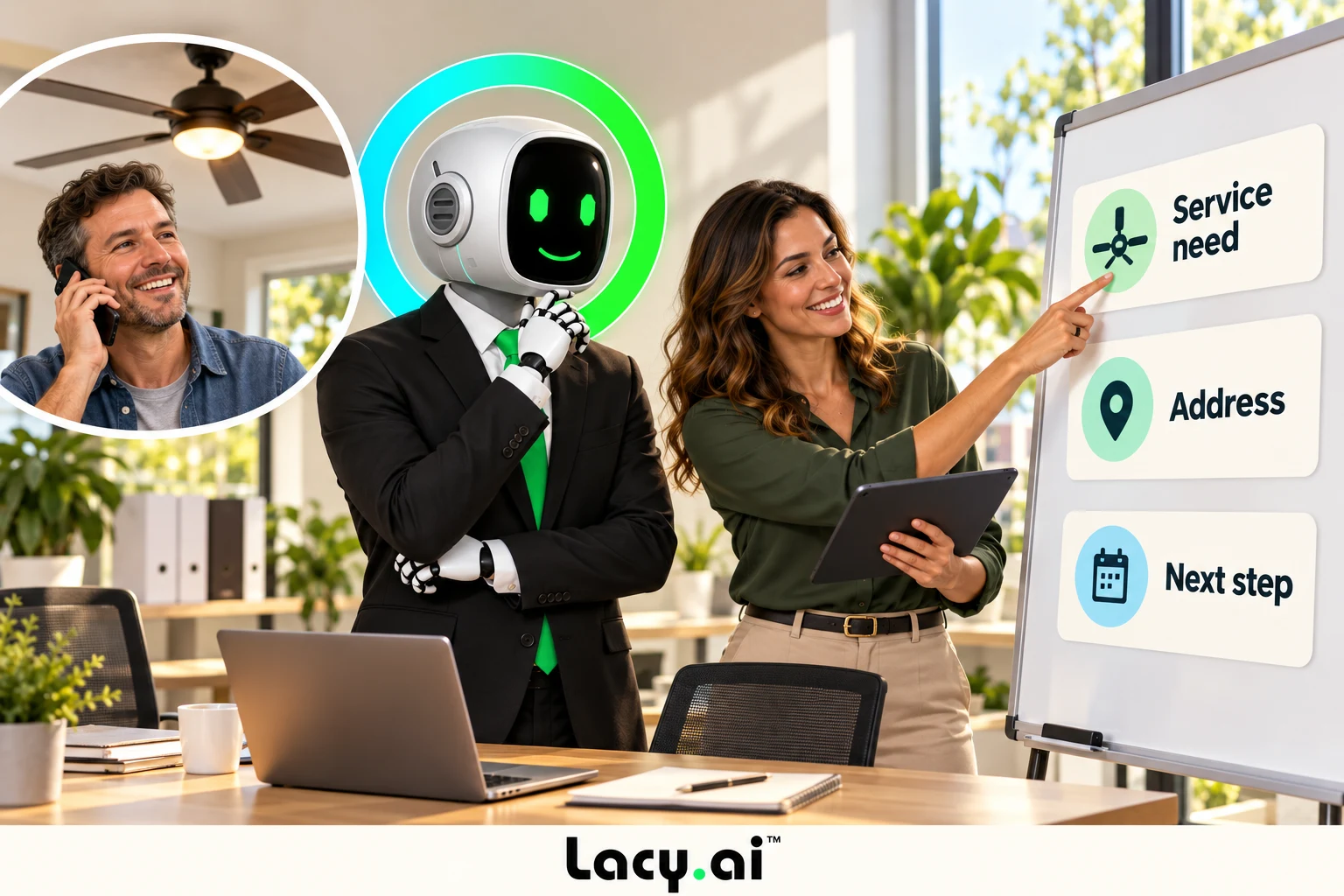
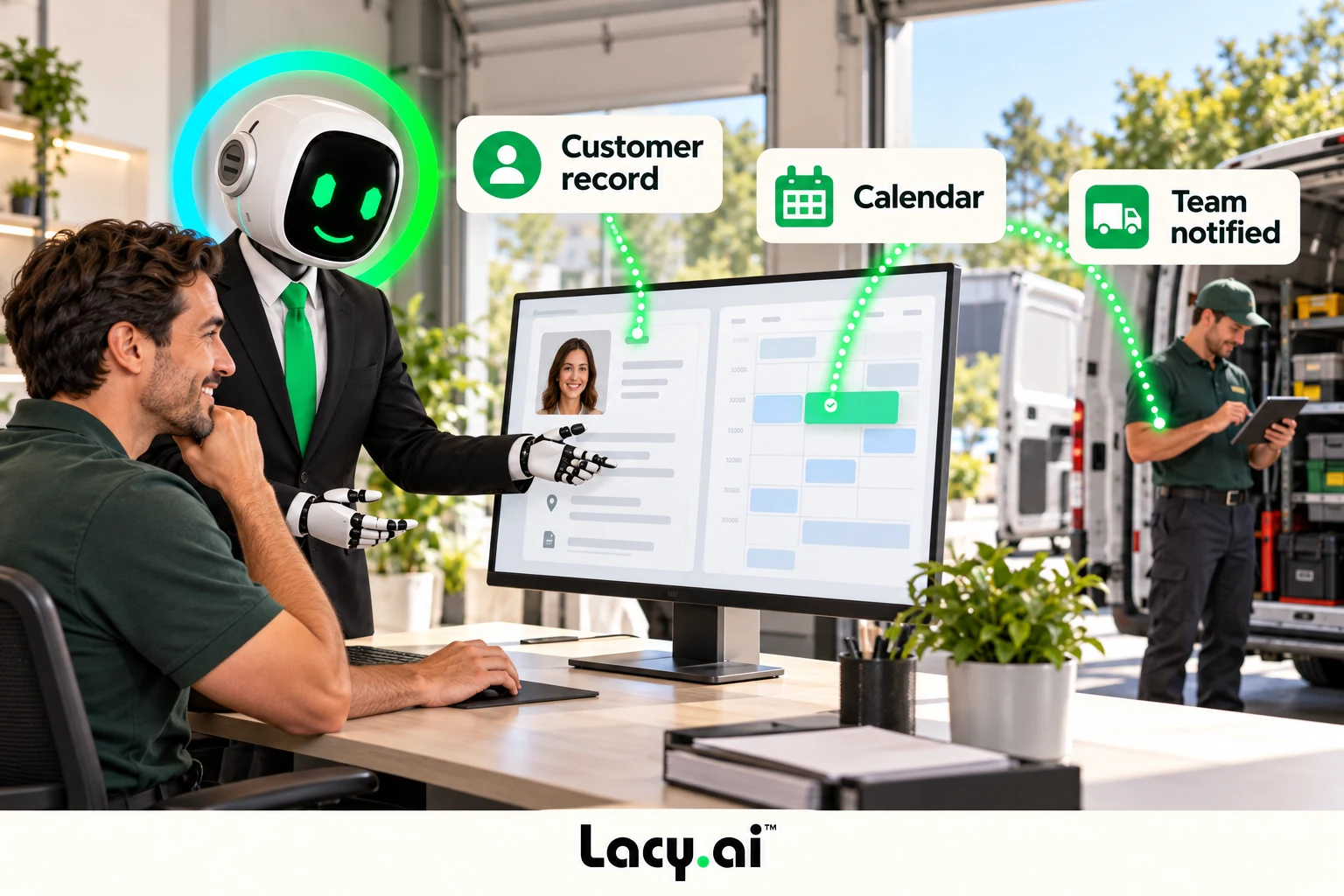
Connect customer records, calendars, and workflow tools around the systems your business already uses.
Test a call through to the connected record and team notification before putting the workflow to work.
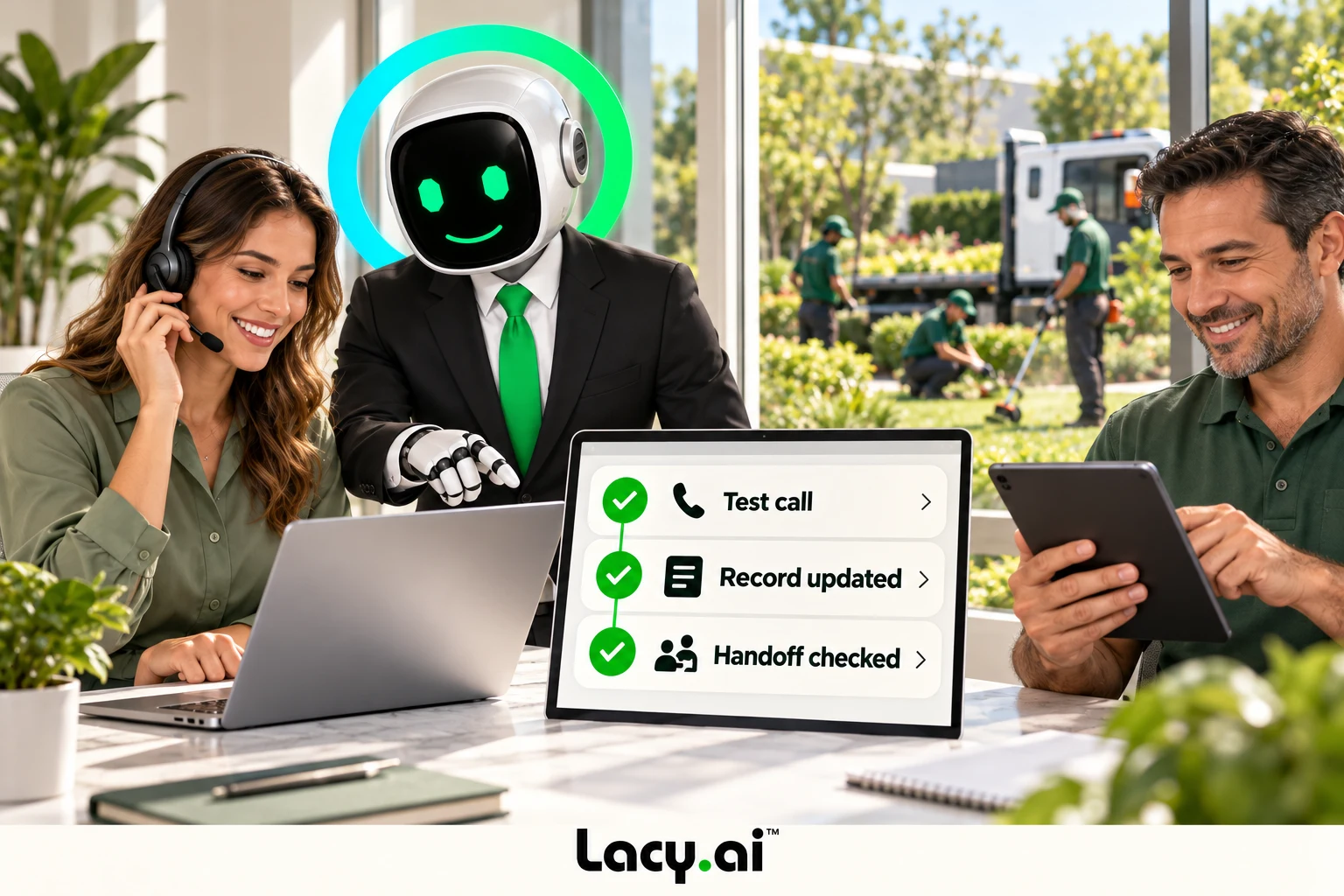
Illustrative workflows. Available controls and actions depend on your plan, connected systems, field mappings, and configured business rules.
Book a Free 30-Minute DemoGive the team the context to act.
Move service details, call summaries, lead status, and follow-up needs into your configured customer record.
Connect the request to scheduling.
Support appointment scheduling, confirmations, rescheduling requests, and appointment-related follow-up.
Move the outcome into action.
Route quote requests, callback tasks, urgent service needs, and support outcomes into your connected workflow.
Test the connection around your rules.
Plan the data, field mapping, routing logic, and available actions with the Lacy.ai implementation team.
Listen to real English-language inbound examples of Lacy answering calls, capturing details, recognizing customer needs, and moving each conversation toward the right next action.

Target orders a pallet of ice from SF Ice. The AI Phone Agent naturally confirms the request and applies its trained knowledge of the pallet’s weight and quantity.

Walgreens requests the minimum number of ice bags. The AI Phone Agent uses knowledge base logic to determine the correct quantity and handles the order naturally.

Southwest Airlines orders a pallet of ice and updates the delivery address. The AI Phone Agent reasons through both requests and completes the call in a natural, human-like way.
These are customer calls handled for San Francisco Ice Company. Target, Walgreens, and Southwest Airlines are callers in these examples, not presented as direct Lacy.ai customers or endorsements. Sensitive details may be redacted for privacy.
These English-language inbound recordings demonstrate call handling and order intake for San Francisco Ice. These recordings do not demonstrate a particular integration. Connected actions depend on your systems and configured workflow.
Connect your AI Phone Agent to the CRMs, calendars, help desks, workflow platforms, and business systems your service team already uses.
Available controls and actions depend on your plan, connected systems, and configured business rules.
The service request, appointment details, and follow-up needs can travel with the customer record. Connect the systems your team works in, so a call can become the next useful action.
AI phone intake, appointment scheduling, and post-call notes in a customer-specific deployment.
Supported actions depend on configured records, field mappings, and scheduling rules.
Turn conversation insights into an updated contact and the next AI interaction.
The automation guide also covers creating contacts from inbound calls.
Define which details to capture, where to write them, and what happens next. Available actions depend on your CRM, connection, field mapping, and implementation scope. Test the workflow against your business rules.
When the details are ready, your configured workflow can share the next step with the customer and the service team.
Lacy.ai connects AI Phone Agents to the systems service businesses use to manage calls, customers, appointments, workflows, support tickets, and follow-up. This can include CRMs, calendars, help desks, workflow platforms, communication tools, analytics systems, and business operations software.
Lacy.ai integrations help turn phone conversations into business action. When a customer calls, your AI Phone Agent can answer, qualify, book, route, capture details, and trigger updates across your connected systems. This helps reduce manual data entry, missed handoffs, delayed follow-up, and disconnected customer records.
Yes. Lacy.ai can connect AI Phone Agent call data to CRM workflows so customer records, lead statuses, call summaries, appointment outcomes, service interests, callback requests, and follow-up actions can be updated after the call.
Yes. Lacy.ai can support calendar-connected workflows for appointment scheduling, booking confirmations, rescheduling requests, and appointment-related follow-up. This is especially valuable for home service companies, field service teams, sales teams, and appointment-driven businesses.
Yes. Lacy.ai can trigger post-call workflows based on what happened during the conversation. For example, if a caller requests a quote, books an appointment, asks for emergency service, needs a callback, or requires support, Lacy.ai can help move that outcome into the right workflow.
Lacy.ai can help capture and sync structured call data such as caller name, phone number, email, service address, call summary, transcript, recording, service interest, urgency level, appointment status, call outcome, disposition, lead status, callback request, and follow-up requirement.
Yes. Lacy.ai is built for service businesses and home service companies that rely on CRM, scheduling, dispatch, and workflow systems. This can support use cases for HVAC, roofing, plumbing, electrical, remodeling, landscaping, pest control, garage doors, restoration, windows, flooring, delivery, logistics, and other service operations.
Many Lacy.ai integration workflows can be configured without heavy development work, depending on the systems, workflow logic, and customer requirements. For more advanced use cases, Lacy.ai can support custom integration planning through its implementation and AI Optimization team.
Yes. Lacy.ai provides both the platform and implementation support. That means your team gets the AI Phone Agent software plus guidance for configuring integrations, CRM sync, workflow triggers, call data capture, routing logic, appointment workflows, testing, and optimization.
Yes. Lacy.ai can support custom integration workflows depending on the system, available APIs, webhook capabilities, business rules, and implementation scope. This is useful for companies with custom CRMs, industry-specific software, internal tools, or multi-step operating workflows.
After a call, Lacy.ai can help generate a summary, capture structured variables, assign a call outcome, sync data to your CRM, trigger follow-up workflows, create tasks, notify your team, update appointment records, or send information to connected systems.
Yes. Lacy.ai can connect inbound call automation, outbound AI call campaigns, appointment scheduling, CRM sync, analytics, call routing, and post-call workflows into the same connected operating layer.
Integrations make AI call automation more useful because the conversation does not stop at the phone call. Lacy.ai can help move call outcomes into the systems where your team works, turning voice conversations into CRM updates, calendar events, support tickets, follow-up messages, workflow triggers, and operational data.
Yes. By capturing structured call data and syncing it to connected systems, Lacy.ai can help reduce the manual work of copying notes, updating records, creating tasks, sending reminders, and routing customer requests after each call.
Lacy.ai integrations are best for service businesses that depend on customer calls, including home service companies, field service teams, dispatch operations, call centers, appointment-based businesses, B2B service companies, delivery teams, logistics companies, and multi-location operators.
The best path is to review your CRM, calendar, workflow tools, help desk, and business systems with the Lacy.ai team. If your system supports APIs, webhooks, native integrations, or exportable workflows, Lacy.ai may be able to connect call data and automation logic to your process.
The main benefit is turning customer calls into structured, automated business action. Instead of calls ending as notes, recordings, or missed follow-up, Lacy.ai helps your business answer, qualify, book, sync, route, report, and trigger the next step automatically.
Review your CRM, calendar, and workflow requirements with the Lacy.ai team to plan the right integration.
Book a Free 30-Minute Demo