Target pallet order
What happens in this call
Target orders a pallet of ice from SF Ice. The AI Phone Agent naturally confirms the request and applies its trained knowledge of the pallet’s weight and quantity.
Give customers, senders, recipients, drivers, and operations teams a clear next step. Lacy.ai answers calls, captures structured delivery details, classifies the request, and routes the conversation into the workflow your team approves.
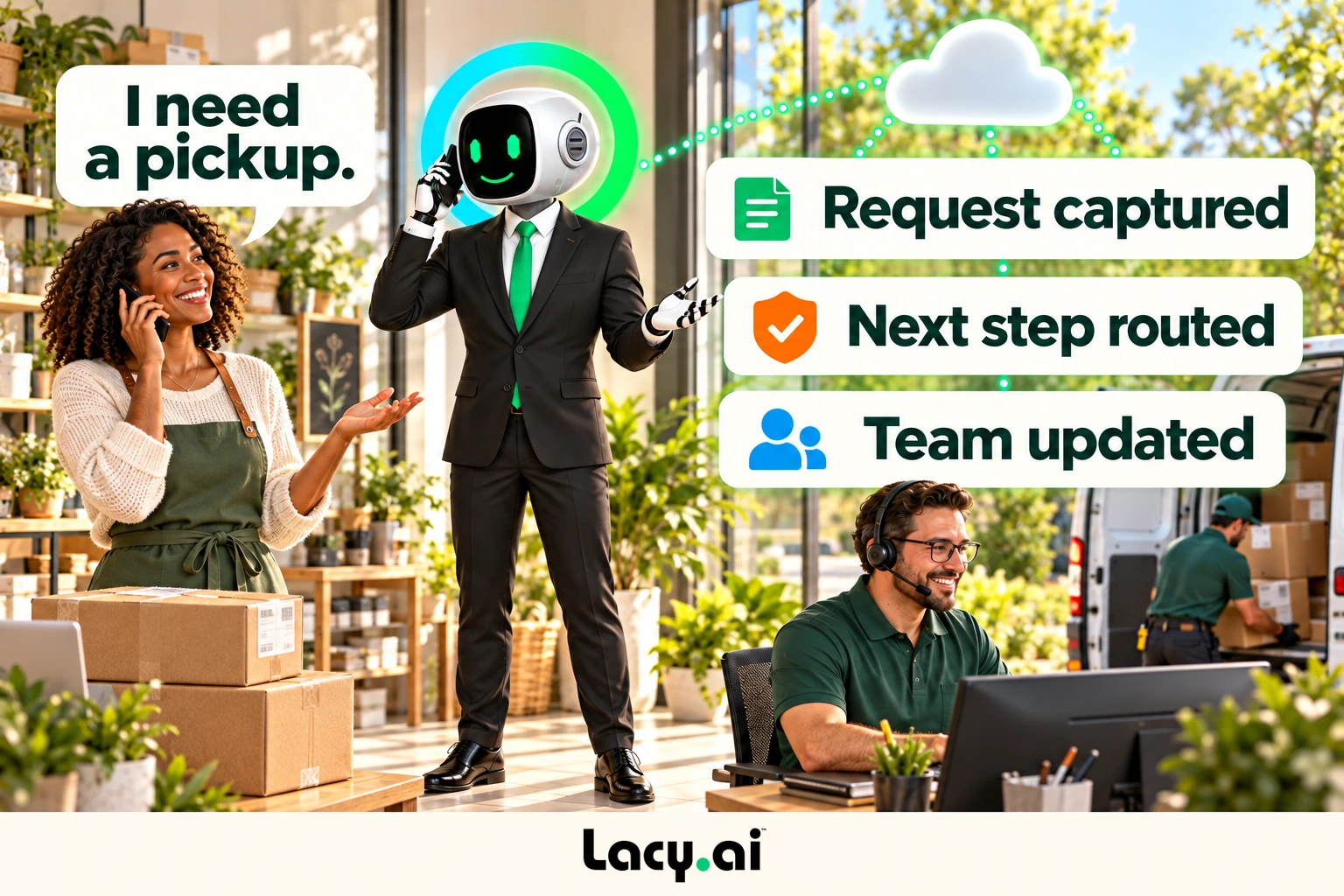
Listen to real examples of Lacy answering calls, capturing details, recognizing customer needs, and moving each conversation toward the right next action.
Target orders a pallet of ice from SF Ice. The AI Phone Agent naturally confirms the request and applies its trained knowledge of the pallet’s weight and quantity.
Walgreens requests the minimum number of ice bags. The AI Phone Agent uses knowledge base logic to determine the correct quantity and handles the order naturally.
Southwest Airlines orders a pallet of ice and updates the delivery address. The AI Phone Agent reasons through both requests and completes the call in a natural, human-like way.
These are customer calls handled for San Francisco Ice Company. Target, Walgreens, and Southwest Airlines are callers in these examples, not presented as direct Lacy.ai customers or endorsements. Sensitive details may be redacted for privacy.
Lacy.ai follows the request types, fields, routing rules, permissions, and human escalation paths approved for your operation.
Support inbound, overflow, and after-hours calls using approved brand language.
Identify the pickup, status, change, exception, callback, or supported path.

Collect the structured delivery details required for that request type.

Apply approved routing, escalation, notification, and callback rules.
Create the configured handoff in the appropriate connected system or team queue.
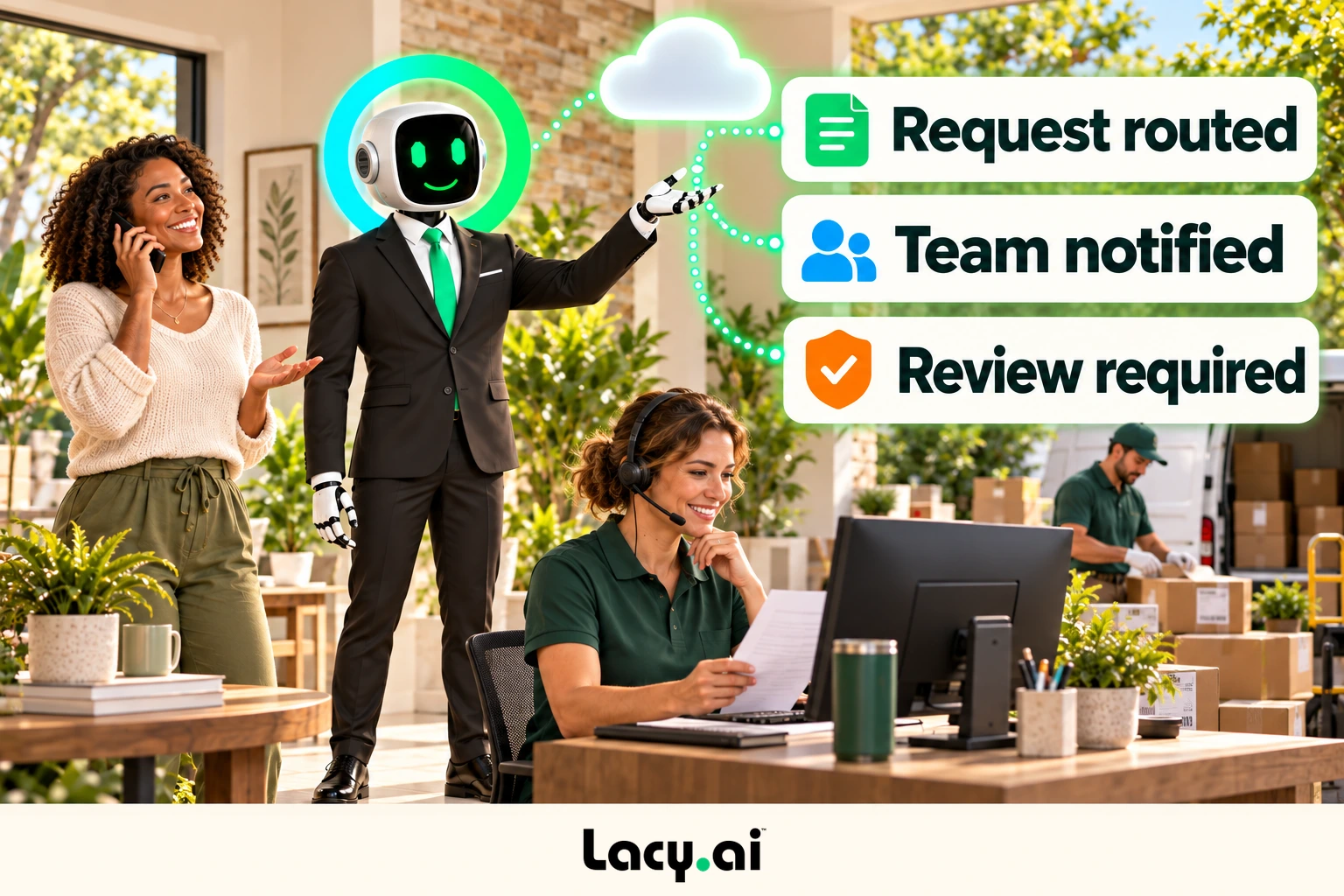
Configure Lacy.ai around your service areas, hours, intake fields, escalation paths, operating policies, and connected systems.
Capture account, pickup, destination, timing, package, contact, and approved handling details.
Identify the caller and shipment context, then route the request to the approved response path.
Collect corrected addresses, access notes, contact changes, and requested delivery instructions.
Classify failed-delivery questions, recipient issues, missing access information, and time-sensitive requests.
Separate routine requests from calls that require urgent response or a scheduled callback.
Send structured call outcomes to configured CRM, task, API, webhook, notification, or workflow connections.
Courier operations move quickly. A vague voicemail creates extra work for customer service, dispatch, drivers, account teams, and operations. Lacy.ai collects the caller's context and gives the next team a cleaner handoff.
Book a Free 30-Minute Demo →Caller I need to correct the delivery address and add building access instructions.
Lacy.ai I can capture the corrected details and route them to the right team for review.
Yes. It can be configured for inbound, overflow, and after-hours coverage with approved request types, disclosures, escalation paths, and callback rules.
It can capture approved pickup information. Whether the request becomes an order, quote request, or callback depends on the connected system and workflow configuration.
It can route a status request to the approved response path. Current status can only be referenced when a verified integration provides that information.
It can collect corrected details and create the approved handoff. Changes requiring operational confirmation remain subject to human review.
Yes. Your team defines the conditions, recipient, required intake, fallback, and escalation process.
It can support connected updates through available APIs, webhooks, CRM integrations, and workflow automation after permissions and fields are verified.
Show us how your team handles pickups, delivery questions, exceptions, after-hours calls, and operational follow-up. We will help identify where a Lacy.ai workflow can move callers toward the right next step.